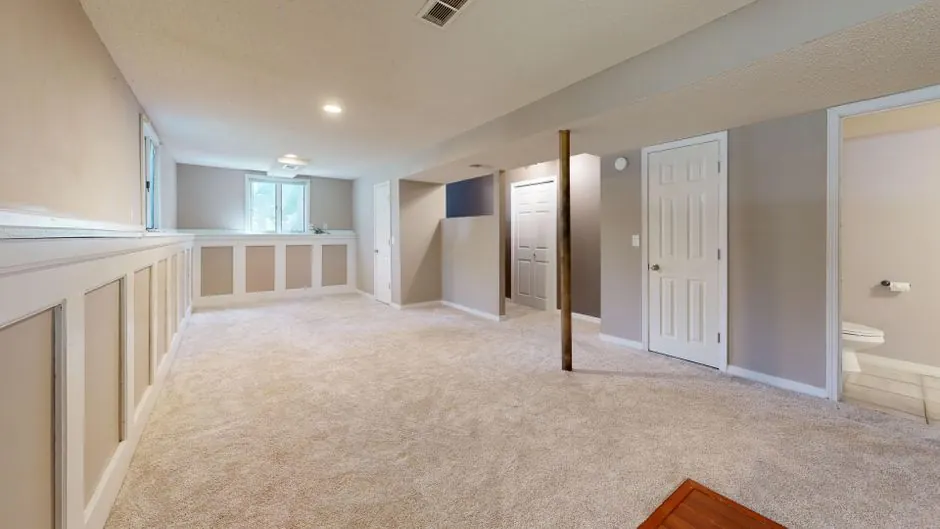
Your house smells musty after water damage restoration because moisture is still trapped somewhere the drying equipment did not reach - usually inside wall cavities, under flooring, in insulation, or in a crawl space. That lingering dampness feeds mold and bacteria, and their byproducts are what your nose is picking up. The smell is not a cosmetic problem; it is a moisture reading you can smell.
Below we walk through the real causes, the hiding spots we find most often in San Marcos homes, how professional odor removal and deodorization actually works, and what it costs in 2026.
The short answer: moisture is still hiding somewhere
Why does my house smell musty after water damage restoration is a question that almost always traces back to one thing: the structure was not dried to its pre-loss moisture content. Air movers and dehumidifiers dry the surfaces they can reach. They do not dry inside a closed wall cavity, beneath a glued-down hardwood floor, or under the plastic vapor barrier in a crawl space.
When we re-inspect homes after a previous restoration, we put a pin-type moisture meter into baseboards, sill plates, and subfloor seams. It is common to find readings of 18 to 24 percent in wood that looks and feels dry on the surface. Wood should be back under 12 percent before reconstruction. Anything above that keeps the microbial growth cycle running.
The second most common cause is that the source was never fully stopped. A slow supply-line weep, a hairline crack in a shower pan, or a roof flashing that only leaks during a hard rain will keep reintroducing water every week. You cannot deodorize your way out of an active leak.
Why does my house smell musty after water damage restoration in San Marcos TX?
San Marcos sits in a humid subtropical corridor where summer relative humidity routinely sits between 65 and 80 percent, and that changes how drying behaves here compared to drier parts of Texas. On a 95-degree August day, an open window is not drying your house - it is feeding it moisture.
Three local factors show up again and again in our inspections:
- Slab-on-grade construction. Most homes built in San Marcos after 1980 sit on a concrete slab. Water that gets under vinyl plank or tile has nowhere to drain and no airflow beneath it. It wicks into the slab and stays there for weeks.
- Pier-and-beam and crawl space homes. Older neighborhoods near downtown and around the university have raised floors with vented crawl spaces. After a plumbing leak, those crawl spaces hold humidity like a cave, and the smell rises straight into the living room.
- Storm-driven intrusion. Spring and fall storm systems push water through window frames, door thresholds, and roof penetrations. That water often lands inside wall cavities where nobody looks.
If your water damage came from a storm rather than a plumbing failure, the cleanup scope is different - debris, contaminated runoff, and roof damage all change the drying plan. Our storm damage restoration San Marcos TX team handles those jobs with the same moisture-mapping approach we use on interior leaks.
One more local reality: San Marcos has a large rental population, and rental properties often get the fastest, cheapest dry-out. We regularly walk into duplexes near Texas State where the carpet was dried but the pad was never replaced. Wet pad is a sponge, and it will smell for months.
Does a musty smell mean there is mold?
A musty smell does not guarantee visible mold, but it is a strong indicator that mold or active microbial growth is present somewhere in the building. The odor comes from microbial volatile organic compounds - gases that mold, mildew, and some bacteria release as they digest organic material like drywall paper, wood, and dust.
You do not always see it. Mold can colonize the back side of drywall, the top plate inside a wall, or the underside of subfloor and stay completely hidden from the room side. By the time you see a stain, the colony behind it has usually been growing for one to three weeks.
Here is the timeline that matters. Given a wet, cellulose-rich surface and temperatures between 68 and 86 degrees, mold can begin growing in 24 to 48 hours. In a San Marcos attic in July, that window is closer to 24 hours.
If you suspect hidden growth, the right move is testing before guessing. Our mold inspection and testing San Marcos TX service uses moisture meters, thermal imaging, and air samples to tell you what is actually there and where it is. That report also gives you something concrete to hand your insurance adjuster.
The usual hiding spots we find in San Marcos homes
After several hundred dry-outs in this area, the same locations come up over and over. If your house still smells musty, these are the first places to check.
- Baseboards and bottom plates. Drywall wicks water upward, but the wood bottom plate behind the baseboard holds it longest. Pull a section and meter it.
- Carpet pad. Pad is the single most common missed item. If it got wet and was not replaced, it will smell indefinitely.
- Cabinet toe kicks and under-sink bases. Particleboard cabinet bases swell and stay damp for weeks after a supply-line leak.
- Crawl spaces. Vapor barriers trap moisture against the joists. We see this constantly in older homes off Ranch Road 12.
- HVAC ductwork and air handlers. If the system ran while the house was wet, the duct interior and drain pan can harbor growth - and then it distributes the smell to every room.
- Attic insulation. Blown-in insulation that got wet from a roof leak compresses, loses R-value, and holds moisture. It does not dry in place.
If your crawl space is the culprit, drying it properly means sealing and conditioning the space, not just running a fan down there. Our crawl space drying San Marcos TX work includes vapor barrier repair, joist and subfloor drying, and a permanent dehumidification plan so it does not happen again next spring.
How to get rid of musty smell after water damage
Getting rid of a musty smell after water damage is a sequence, not a single step. Masking the odor with sprays, candles, or plug-ins makes it worse by hiding the moisture signal you need to find.
Here is the order that works:
- Find the moisture. Thermal imaging plus pin meters on every wall, floor, and ceiling that was in the affected zone. No exceptions.
- Remove unsalvageable material. Wet pad, saturated insulation, and drywall that has been wet more than 48 hours come out. This is not optional.
- Dry the structure to standard. That means wood under 12 percent moisture content and ambient relative humidity brought down to a documented target. This is where structural drying San Marcos TX earns its keep - it is measured, logged, and verifiable, not a guess.
- Treat the source of the odor. Antimicrobial application on affected framing, HEPA vacuuming of surfaces, and - for severe cases - ozone or hydroxyl treatment in an empty, sealed space.
- Verify. Re-meter, re-sniff, and clear the job before reconstruction starts. If it still smells, you are not done.
Ozone treatment for musty odor in San Marcos TX works, but only under specific conditions: the space must be empty of people, pets, and plants, and the ozone level has to be high enough and held long enough to oxidize the odor compounds. A 30-minute ozone run in an occupied house does nothing except irritate your lungs. We typically run 4 to 8 hours depending on cubic footage and odor severity, then ventilate for at least 2 hours before anyone re-enters.
For lighter odors, hydroxyl generators are the better choice because they can run in occupied spaces. For smoke or sewage-related odors, the treatment plan changes again - those need source removal plus sanitization before any odor treatment.
Common mistakes that keep the smell coming back
Most repeat musty-smell calls we run are not new water damage. They are the same damage that was never finished correctly. These are the mistakes we see most.
- Trusting the surface. Drywall feels dry to the touch long before the framing behind it is dry. Touch is not a measurement.
- Running the HVAC during a wet-out. It spreads spores and moisture through the whole house. Shut it off until the ducts are checked.
- Reusing wet carpet pad. Pad is cheap. Replacing it costs a fraction of what mold remediation costs.
- Skipping the crawl space. If the water came from above and the crawl space is vented, some of that moisture ended up down there.
- Painting over mold. Kilz and similar primers hide stains. They do not kill colonies or remove the food source.
- Closing up too early. Reconstruction before final moisture verification traps moisture inside the assembly - the worst possible outcome.
If a previous contractor already did the work and you are still smelling it, that is a red flag worth acting on. Our water damage inspection San Marcos TX service is built for exactly this situation: a second opinion with meters and thermal imaging, not a sales pitch.
When to call a professional
Call a professional when the smell has lasted more than 48 hours after your dry-out, when you can see discoloration on drywall or trim, when anyone in the house is having unexplained headaches, congestion, or coughing, or when the affected area is larger than about 10 square feet.
Those thresholds are not arbitrary. Under 10 square feet of mold, a careful homeowner with proper PPE can often handle it. Above that, containment, negative air pressure, and HEPA filtration become necessary to avoid spreading spores through the house.
San Marcos Water Restoration Pros handles odor removal and deodorization as part of the full restoration scope, not as a standalone add-on. We find the moisture, dry the structure to standard, remove what cannot be saved, treat the source, and verify before we hand the job back. If you have already had a restoration done and it still smells, we will tell you honestly what was missed.
Frequently Asked Questions
Why does my house smell musty after water damage restoration?
Moisture is still trapped in a material the drying equipment did not reach - typically wall cavities, carpet pad, insulation, or a crawl space. Mold and bacteria feeding on that damp material release the gases you smell. Until the moisture is found and removed, the odor will return.
Does a musty smell mean there is mold?
Not always visible mold, but usually active microbial growth somewhere. The odor comes from mold and mildew byproducts. Hidden growth behind drywall or under flooring is common. Air testing and moisture mapping confirm it in about 1 to 2 hours on site.
How do professionals remove musty odors in San Marcos TX?
We find and remove the moisture source, take out unsalvageable material like wet pad and insulation, dry the structure to under 12 percent wood moisture, apply antimicrobials, and use ozone or hydroxyl treatment for severe odors. Then we verify before reconstruction.
How much does odor removal cost after water damage?
In 2026, standalone odor treatment in San Marcos typically runs $400 to $1,200 depending on square footage and severity. When it is part of a full restoration with drying and mold work, the odor treatment is usually bundled into the overall claim.
Can I just use an ozone machine myself?
You can rent one, but ozone is hazardous. It requires an empty space, correct concentration for the cubic footage, and full ventilation afterward. Done wrong, it irritates lungs and does not reach the actual odor source inside walls.
Get help with water damage restoration in San Marcos
If your house still smells musty weeks after a dry-out, the moisture is still there - and it will not leave on its own. We will find it, dry it, treat it, and verify it before we call the job done.
Call San Marcos Water Restoration Pros at 512-325-0105 for a moisture inspection and odor assessment.